Meta Description:
Explore the U.S. immigration law process with an in-depth guide covering visas, green cards, and common FAQs. Get practical advice and legal insights to assist in your immigration journey.
SEO Keywords:
- U.S. immigration law
- Immigration visa types
- Green card application
- Immigration process guide
- How to apply for U.S. visa
- Immigration laws FAQ
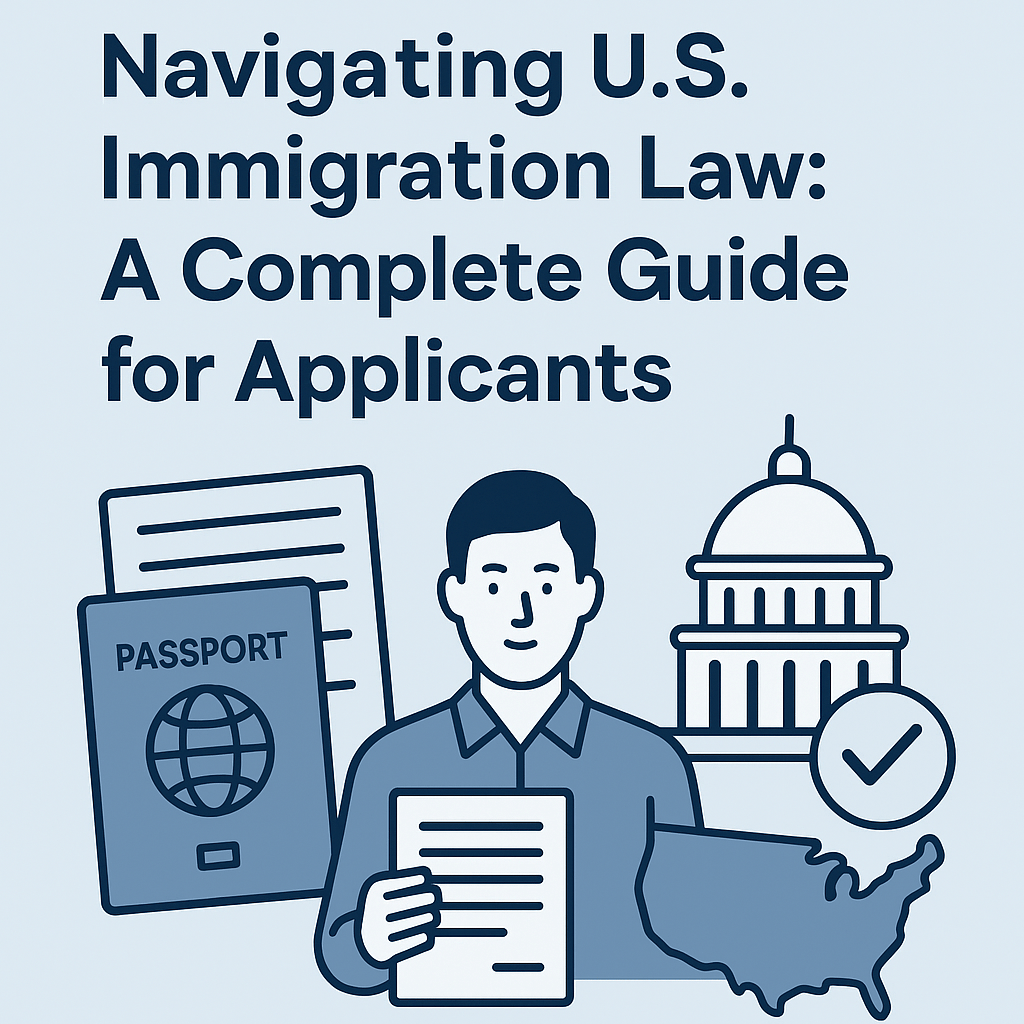
H1: Navigating U.S. Immigration Law: A Complete Guide for Applicants
Navigating the U.S. immigration system can be a complex process, but understanding the requirements, procedures, and necessary documentation will significantly increase your chances of a successful application. This guide provides a comprehensive breakdown of U.S. immigration law, detailing the different types of visas, Green Card applications, and common questions. Whether you’re applying for a temporary stay or permanent residency, this guide will help you understand the process from start to finish.
H2: Introduction to U.S. Immigration Law
The U.S. immigration system regulates who can enter and stay in the country. It determines the process for obtaining visas, work permits, and permanent residency (Green Cards). U.S. immigration laws have been shaped by decades of political, social, and economic factors, and they continue to evolve to address the needs of the country.
History of U.S. Immigration Law
U.S. immigration laws date back to the Naturalization Act of 1790, which established the first legal framework for naturalizing immigrants. Over the years, major laws, such as the Immigration and Nationality Act (INA) of 1965, have opened the doors to immigrants from various parts of the world, while other laws have regulated immigration to maintain national security and economic stability.
H2: Types of U.S. Visas and Green Cards
There are two main categories of U.S. visas: non-immigrant visas (temporary) and immigrant visas (permanent residency). Additionally, U.S. citizens and lawful permanent residents can sponsor certain foreign nationals for Green Cards.
H3: Non-Immigrant Visas
Non-immigrant visas are for individuals who plan to stay temporarily in the U.S. These visas are for various purposes such as tourism, study, and employment.
- B-1/B-2 Tourist and Business Visas
These are the most common visas for individuals traveling to the U.S. temporarily. The B-1 visa is for business-related activities, while the B-2 visa is for tourism and medical visits. - F-1 Student Visa
The F-1 visa allows foreign students to study in the U.S. at accredited institutions. To qualify, you must prove enrollment and demonstrate the ability to pay for your studies and living expenses. - H-1B Work Visa
The H-1B visa is issued to individuals with specialized skills in a particular field, such as science, technology, engineering, and mathematics (STEM). It allows individuals to work in the U.S. for an employer in a professional capacity. - J-1 Exchange Visitor Visa
The J-1 visa is for individuals participating in exchange programs that promote cultural exchange, such as students, scholars, or medical trainees.
H3: Immigrant Visas
Immigrant visas are for individuals seeking permanent residency in the U.S. These visas can be obtained through family sponsorship, employment, or the Diversity Visa Lottery.
- Family-Based Immigration
U.S. citizens and permanent residents can sponsor close family members for immigration to the U.S. This includes spouses, children, parents, and siblings. - Employment-Based Immigration
Employment-based immigrant visas are for individuals who have a job offer from a U.S. employer. There are several categories, including EB-1 (for individuals with extraordinary abilities), EB-2 (for professionals with advanced degrees), and EB-3 (for skilled workers and professionals). - Diversity Visa Program (DV Lottery)
The DV Lottery is a program that makes 55,000 Green Cards available annually to individuals from countries with low immigration rates to the U.S. Applicants are selected randomly.
H3: Green Card Application Process
A Green Card allows foreign nationals to live and work permanently in the U.S. There are two main ways to apply:
- Adjustment of Status
This process allows individuals already in the U.S. on a temporary visa to apply for a Green Card without leaving the country. It’s common for individuals who are applying through family or employment. - Consular Processing
For individuals outside the U.S., consular processing involves applying for a Green Card at a U.S. embassy or consulate in their home country. This process requires an interview and approval from the U.S. Department of State.
H2: Key Steps in the U.S. Immigration Process
Understanding the key steps in the immigration process is essential to ensure a smooth and successful application. Below are the basic steps you will need to follow:
- Research Visa Options
The first step is to determine the type of visa or Green Card that fits your specific circumstances. Whether you’re applying for a student visa, work visa, or family-based Green Card, each type has different requirements. - Complete the Application Forms
After identifying the right visa or Green Card, you’ll need to complete the necessary forms. Common forms include the DS-160 for non-immigrant visas, I-130 for family-based immigration, and I-485 for Adjustment of Status applications. - Gather Supporting Documents
For most visa or Green Card applications, you will need to provide supporting documents such as your passport, financial records, proof of employment or educational enrollment, and medical records. - Schedule the Visa Interview
Once your application is submitted, you’ll typically need to schedule an interview at the U.S. embassy or consulate. The interview is a critical step in the visa application process. - Attend the Interview
At the interview, you’ll need to present your documents and answer questions about your application. Be honest and clear during this process to avoid delays or denials. - Wait for the Decision
After the interview, you will have to wait for a decision on your application. The process can take several weeks to several months, depending on the visa type and the country of origin. - Receive the Visa or Green Card
If your application is approved, you’ll receive your visa or Green Card and instructions on how to enter the U.S. If you’re outside the U.S., you will receive instructions for entering the country.
H2: Common Questions and Answers (FAQs)
- What is U.S. immigration law?
U.S. immigration law governs the entry and stay of foreign nationals in the U.S. It includes rules about visas, green cards, and naturalization. - How do I apply for a U.S. visa?
You need to determine which visa you qualify for, complete the necessary application forms, schedule an interview, and attend the interview at a U.S. embassy or consulate. - How long does it take to get a U.S. visa?
The processing time can vary greatly depending on the type of visa and the applicant’s country of origin. On average, it can take several months to a year. - What documents do I need to apply for a Green Card?
You will need to submit various forms and documents, including proof of identity, financial proof, medical exams, and sponsorship documents if applying through family or employment. - Can I work while waiting for my Green Card?
Yes, if you’ve filed for a Green Card and are eligible, you can apply for an Employment Authorization Document (EAD) to work while your Green Card application is processed. - What is the difference between a non-immigrant and an immigrant visa?
Non-immigrant visas are for temporary stays, while immigrant visas are for individuals seeking permanent residency. - What is an EB-5 visa?
The EB-5 visa is for investors who wish to invest in U.S. businesses that create jobs and qualify for permanent residency. - What if my visa is denied?
If your visa is denied, you can appeal the decision or reapply. The reason for the denial will determine your next steps. - Can I bring my family with me on a visa?
Yes, many visa types allow you to bring your immediate family members (spouse and children) to the U.S. If applying for a Green Card, your family can often be included in the application. - What happens if I overstay my visa?
Overstaying a visa can result in penalties, including being barred from re-entering the U.S. for several years. It’s essential to extend your visa or leave the U.S. before your authorized stay expires.
11. What is the process to apply for an H-1B visa?
- The H-1B visa application process involves obtaining a job offer from a U.S. employer in a specialty occupation, filing a labor condition application (LCA) with the U.S. Department of Labor, and submitting a petition to the U.S. Citizenship and Immigration Services (USCIS). After USCIS approval, the applicant attends an interview at a U.S. embassy or consulate.
12. Can my spouse and children accompany me on a visa?
- In many cases, yes. Spouses and unmarried children under the age of 21 can accompany or join the principal applicant under H-4, F-2, or other visa categories. However, the spouse and children may need to apply separately for dependent visas.
13. What is the K-1 visa for fiancés?
- The K-1 visa is for foreign nationals who are engaged to a U.S. citizen. The U.S. citizen must file a petition, and once approved, the fiancé can travel to the U.S. for the marriage to take place within 90 days.
14. What happens if my visa expires while I am in the U.S.?
- If your visa expires while you are in the U.S., you become out of status. Overstaying your visa can result in fines, deportation, and being barred from re-entering the U.S. for several years. It’s important to extend your visa or leave the U.S. before the expiration date.
15. How do I apply for asylum in the U.S.?
- To apply for asylum, you must file an I-589 form within one year of arriving in the U.S. You must prove that you have a well-founded fear of persecution in your home country based on race, religion, nationality, political opinion, or membership in a particular social group.
H2: Real-Life Examples
Here are 10 real-life examples of individuals navigating the U.S. immigration process successfully:
- Example 1: Applying for an F-1 Student Visa
- A student from India applied for an F-1 visa to pursue a master’s degree in the U.S. They completed the application, provided their acceptance letter, and showed financial support. They attended the interview and received approval in two months.
- A student from India applied for an F-1 visa to pursue a master’s degree in the U.S. They completed the application, provided their acceptance letter, and showed financial support. They attended the interview and received approval in two months.
- Example 2: EB-1 Visa for Extraordinary Abilities
- A researcher in biotechnology from Germany applied for an EB-1 visa based on their extraordinary ability in scientific research. They submitted proof of publications, awards, and other contributions to the field. Their application was approved in 6 months.
- A researcher in biotechnology from Germany applied for an EB-1 visa based on their extraordinary ability in scientific research. They submitted proof of publications, awards, and other contributions to the field. Their application was approved in 6 months.
- Example 3: Marriage-Based Green Card
- A U.S. citizen married a foreign national and filed for a Green Card for their spouse. They submitted their marriage certificate, financial proof, and attended an interview. The Green Card was approved after 8 months.
- A U.S. citizen married a foreign national and filed for a Green Card for their spouse. They submitted their marriage certificate, financial proof, and attended an interview. The Green Card was approved after 8 months.
- Example 4: H-1B Work Visa Application
- A software engineer from Brazil was sponsored by a U.S. company for an H-1B visa. They completed the application and submitted all necessary documents, including a job offer letter. The visa was approved after 4 months.
- A software engineer from Brazil was sponsored by a U.S. company for an H-1B visa. They completed the application and submitted all necessary documents, including a job offer letter. The visa was approved after 4 months.
- Example 5: Family-Based Green Card
- A lawful permanent resident sponsored their spouse and children for a Green Card. The family attended interviews and provided evidence of their relationship. Their Green Cards were approved after 10 months.
- A lawful permanent resident sponsored their spouse and children for a Green Card. The family attended interviews and provided evidence of their relationship. Their Green Cards were approved after 10 months.
- Example 6: Diversity Visa Lottery Winner
- A citizen from a country with low immigration to the U.S. won the Diversity Visa Lottery. They submitted their application and documents, attended an interview, and received their Green Card after 6 months.
- A citizen from a country with low immigration to the U.S. won the Diversity Visa Lottery. They submitted their application and documents, attended an interview, and received their Green Card after 6 months.
- Example 7: Applying for a B-1 Business Visa
- A business owner from Japan applied for a B-1 visa to attend meetings in the U.S. They provided an invitation letter and proof of business ownership. Their visa was approved within 2 months.
- A business owner from Japan applied for a B-1 visa to attend meetings in the U.S. They provided an invitation letter and proof of business ownership. Their visa was approved within 2 months.
- Example 8: Student Visa Denied Due to Insufficient Funds
- A student from Pakistan was denied an F-1 visa because they could not prove sufficient funds for their studies. They re-applied with additional financial documents and were approved on their second attempt.
- A student from Pakistan was denied an F-1 visa because they could not prove sufficient funds for their studies. They re-applied with additional financial documents and were approved on their second attempt.
- Example 9: Adjustment of Status for U.S. Visitor
- A Canadian citizen entered the U.S. on a tourist visa and later married a U.S. citizen. They filed for Adjustment of Status, provided marriage documents, and were granted a Green Card.
- A Canadian citizen entered the U.S. on a tourist visa and later married a U.S. citizen. They filed for Adjustment of Status, provided marriage documents, and were granted a Green Card.
- Example 10: H-2B Temporary Worker Visa
- A laborer from Mexico applied for an H-2B visa for temporary seasonal work in the U.S. Their employer submitted a petition, and they completed the application. The visa was approved within 3 months.
Example 11: Applying for an H-1B Visa for a Software Developer
- A software developer from India was sponsored by a U.S.-based tech company for an H-1B visa. The company submitted a Labor Condition Application (LCA), and once it was approved, the developer filed the petition with USCIS. The developer attended an interview at the U.S. embassy, where they submitted their educational credentials and job offer letter. The visa was approved within 4 months, and the developer began working in the U.S. shortly thereafter.
Example 12: F-1 Visa Denial Due to Insufficient Financial Support
- A student from Bangladesh applied for an F-1 visa to attend a U.S. university. The visa was initially denied because the student could not provide sufficient proof of financial support. After revising their bank statements and showing proof of scholarship funding, the student re-applied, and the visa was successfully approved on their second attempt.
Example 13: K-1 Fiancé Visa for International Couple
- A U.S. citizen married a foreign national and filed for a K-1 fiancé visa. The couple submitted documents including proof of their relationship and engagement, photos, and communication records. After a successful interview at the U.S. embassy, the fiancé visa was approved, and the foreign national entered the U.S. to marry their U.S. partner within 90 days.
Example 14: Employment-Based Green Card for a Researcher
- A researcher from Germany was hired by a U.S. university to work on a groundbreaking medical project. The employer filed for an EB-2 employment-based Green Card. After submitting letters of recommendation, research publications, and other evidence of the researcher’s extraordinary abilities, the Green Card was approved in 8 months.
Example 15: Family-Based Immigration for a Spouse
- A U.S. citizen filed for a Green Card for their foreign spouse from Mexico. The couple submitted their marriage certificate, joint bank account statements, and proof of shared residence. After an in-person interview at the U.S. embassy and verification of their relationship, the Green Card was granted after 9 months.
H2: Action Plan Checklist
Use this checklist to guide your application process:
- ( ) Determine the appropriate visa type based on your purpose (tourist, work, study).
- ( ) Complete the DS-160 form for non-immigrant visas or the relevant application form for immigrant visas.
- ( ) Gather required documents including passport, financial proof, medical exams, and employment records.
- ( ) Schedule a visa interview at the U.S. embassy or consulate.
- ( ) Prepare for the interview by reviewing your application and ensuring all documents are in order.
- ( ) Attend the interview and provide truthful answers to all questions.
- ( ) Wait for the decision and track your application status online.
- ( ) Follow the next steps after approval (enter the U.S., apply for a Social Security Number).
- ( ) If denied, appeal the decision or reapply based on the feedback you received.
- ( ) Once approved, plan for your relocation and permanent residence in the U.S.
Disclaimer
This document is intended for informational and exploratory purposes only. It does not represent official advice, legal authority, or verified scientific claims. Readers are encouraged to interpret the content thoughtfully and responsibly. No part of this document should be used as a substitute for professional guidance in legal, medical, financial, or technical matters. Use of this material is at the sole discretion and responsibility of the reader.
 Official Docs Guide
Leave a comment