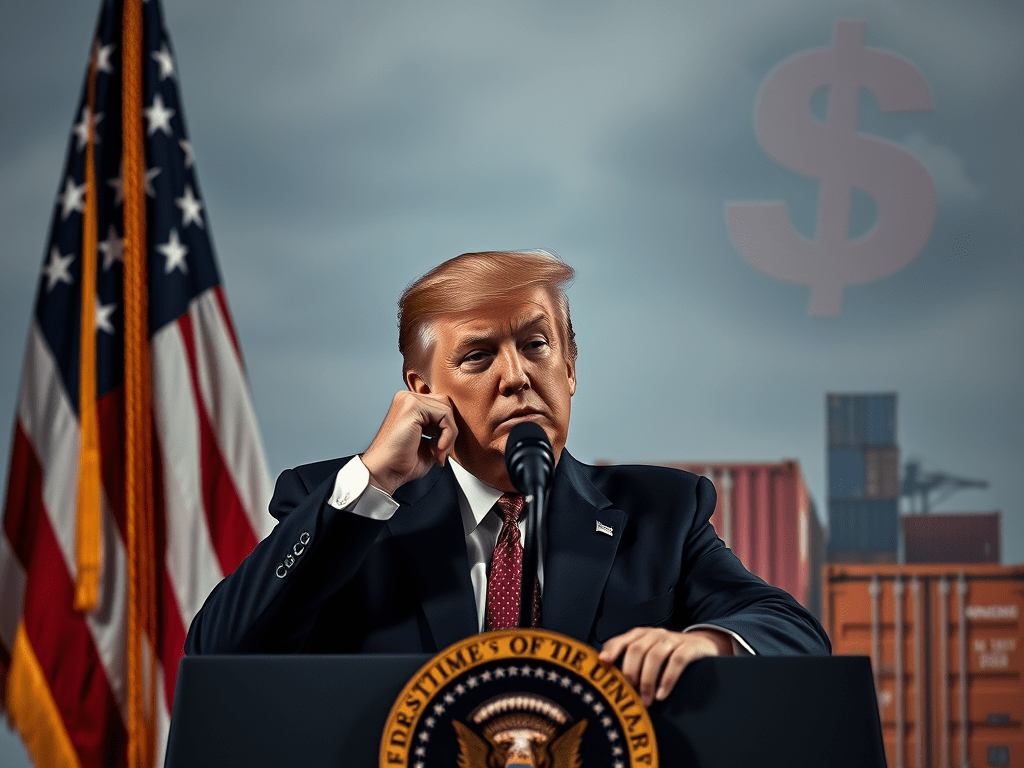
President Donald J. Trump Declares National Emergency to Increase Competitive Edge
On April 5, 2025, President Donald J. Trump declared a national emergency that imposes higher tariffs on goods imported from countries with significant trade deficits with the U.S. This move is part of his administration’s ongoing efforts to reshape U.S. trade policy and create a more balanced global trade environment. The goal is to boost American manufacturing, strengthen economic security, and enhance the country’s global competitive edge.
This decision follows years of tension in U.S. trade relations, especially with China, Mexico, and the European Union. The national emergency declaration gives the President the authority to impose tariffs on a wide range of imported goods, and it marks a bold step in the U.S.’s economic strategy. The tariffs are expected to generate a mixed response, with potential benefits for U.S. manufacturers and job creation in certain industries but challenges for businesses relying on imports.
In this article, we will explore the background behind this policy, its economic implications, and how businesses and consumers are likely to be affected. We will also consider the potential long-term outcomes of President Trump’s national emergency declaration.
H2: The Context Behind the National Emergency Declaration
H3: Understanding the U.S. Trade Deficit
The U.S. has maintained a trade deficit for decades, importing more goods than it exports. In 2024, the U.S. trade deficit stood at $850 billion, with the largest deficits being recorded with countries like China, Mexico, and the European Union. Critics argue that this imbalance has led to the erosion of U.S. industries and the loss of manufacturing jobs, especially in sectors like steel, electronics, and textiles.
By declaring a national emergency and imposing higher tariffs on these trading partners, President Trump aims to curb the U.S. trade deficit, incentivize domestic production, and encourage fairer trade practices from countries that have long benefited from the imbalance. The national emergency declaration grants the President the legal authority to take aggressive action against countries that he believes are engaging in unfair trade practices.
H3: The Legal Framework Behind the Tariff Implementation
The International Emergency Economic Powers Act (IEEPA), passed in 1977, allows the President to declare a national emergency in response to unusual and extraordinary threats to the U.S. economy. Under this act, President Trump has the authority to impose tariffs on goods coming from countries with significant trade deficits, which are deemed to be undermining U.S. economic interests.
The tariffs are expected to range from 10% to 25%, depending on the country and the product. This targeted approach seeks to incentivize nations to adopt fairer trade practices while also ensuring that U.S. businesses are given a level playing field in international markets.
H2: The Economic Impact of the National Emergency Tariffs
H3: Short-Term Economic Consequences
In the short term, the tariffs are likely to result in higher prices for consumers in the U.S. As tariffs increase the cost of imported goods, American businesses that rely on foreign materials will face increased costs, which could lead to higher consumer prices for products such as electronics, clothing, and automobiles.
For example, automobile manufacturers in the U.S. that import parts from Mexico and China will likely see increased production costs, which could be passed on to consumers in the form of higher car prices. Similarly, electronics and textile industries will be impacted by tariffs on Chinese imports, leading to higher costs for everyday consumer goods.
H3: Long-Term Benefits for U.S. Industries
While there may be short-term cost increases, the tariffs are designed to benefit domestic industries in the long term. Manufacturers in sectors like steel, automobiles, and technology are expected to see increased demand for U.S.-made products as tariffs raise the cost of imported goods.
For instance, U.S. steel producers are likely to see an increase in demand for domestically produced steel as tariffs on imported steel raise the prices of foreign-made steel. This could lead to job creation in steel mills and related industries, providing a boost to the manufacturing sector.
H3: Potential Repercussions for U.S. Exporters
On the other hand, U.S. exporters could face retaliatory tariffs from countries affected by the U.S. tariffs. Countries like China and Mexico have already indicated they may impose tariffs on U.S. agricultural products, such as soybeans, pork, and corn. These retaliatory tariffs could hurt American farmers, who rely heavily on exports to these markets.
For example, China’s tariffs on U.S. soybeans have already caused significant economic disruption in farming communities. With increased tariffs on agricultural exports, U.S. farmers could see lower demand for their products, leading to financial strain and potential job losses in the agricultural sector.
H2: Global Reactions and Trade War Risks
H3: Retaliatory Measures from Trade Partners
Countries that are affected by the U.S. tariffs are likely to retaliate by imposing their own tariffs on American goods. China, in particular, has already indicated that it will retaliate with tariffs on key U.S. exports, such as automobiles and agricultural products. The European Union and Mexico have also expressed intentions to impose tariffs on U.S. goods, including aircraft and automobiles.
These retaliatory tariffs could escalate into a full-fledged trade war, which would disrupt global supply chains, increase costs, and lead to economic uncertainty. The long-term effects of a trade war could be harmful to both U.S. businesses and global trade relations.
H3: Diplomatic Negotiations and Trade Agreements
To avoid a prolonged trade war, diplomatic negotiations will be crucial. The U.S. government is likely to enter into trade negotiations with countries like China and the EU to address the imbalances and reach mutually beneficial agreements. These discussions will focus on reducing tariffs, increasing market access, and ensuring that all parties abide by fair trade practices.
H2: How to Navigate the Changing Trade Landscape
H3: Strategies for U.S. Businesses
- Diversify Sourcing: Businesses should look to diversify their sourcing strategies, reducing dependence on countries facing high tariffs. By sourcing from countries not affected by the tariffs, companies can avoid the cost increases associated with these duties.
- Adjust Pricing Strategies: Companies may need to adjust their pricing to account for higher input costs. Strategic pricing adjustments can help offset the increased costs resulting from tariffs while maintaining competitive positioning.
- Explore Domestic Alternatives: Companies in industries like manufacturing and technology should explore domestic production options. By investing in local manufacturing, companies can mitigate the impact of tariffs and contribute to the U.S. economy.
H3: Preparing for a Long-Term Trade Policy Shift
As the U.S. continues to implement its tariff strategy, businesses should be prepared for long-term trade policy changes. This may include new trade agreements and potential shifts in global trade dynamics. Staying informed about policy changes and adapting quickly will be crucial for businesses to maintain competitive advantages.
.
Frequently Asked Questions (FAQs)
- Why did President Trump declare a national emergency?
- To address the U.S. trade deficit with countries like China and Mexico and to give the President expanded powers to impose tariffs on goods from these countries.
- To address the U.S. trade deficit with countries like China and Mexico and to give the President expanded powers to impose tariffs on goods from these countries.
- What impact will the tariffs have on U.S. consumers?
- Consumers may experience higher prices on imported goods, particularly in industries like electronics, clothing, and automotive products.
- Consumers may experience higher prices on imported goods, particularly in industries like electronics, clothing, and automotive products.
- Which countries are most affected by the new tariffs?
- Countries with significant trade deficits with the U.S., including China, Mexico, and the European Union, are most affected.
- Countries with significant trade deficits with the U.S., including China, Mexico, and the European Union, are most affected.
- What industries will benefit from the new tariffs?
- Domestic industries such as manufacturing, steel production, and agriculture could benefit from reduced competition and increased demand for U.S.-made goods.
- Domestic industries such as manufacturing, steel production, and agriculture could benefit from reduced competition and increased demand for U.S.-made goods.
- What are the potential risks of a trade war?
- A trade war could lead to retaliatory tariffs, disrupting global supply chains, increasing costs, and hurting international relations.
- A trade war could lead to retaliatory tariffs, disrupting global supply chains, increasing costs, and hurting international relations.
- How long will the tariffs remain in place?
- The tariffs are expected to remain in effect as long as the trade deficit persists, with periodic reviews and adjustments based on trade negotiations.
- The tariffs are expected to remain in effect as long as the trade deficit persists, with periodic reviews and adjustments based on trade negotiations.
- Will the national emergency tariffs affect global businesses?
- Yes, global businesses that rely on exports to the U.S. will face higher tariffs, which could impact their operations and profitability.
- Yes, global businesses that rely on exports to the U.S. will face higher tariffs, which could impact their operations and profitability.
- What is the goal of the national emergency declaration?
- The goal is to reduce the U.S. trade deficit, promote fairer trade practices, and strengthen domestic industries.
- The goal is to reduce the U.S. trade deficit, promote fairer trade practices, and strengthen domestic industries.
- How do the tariffs impact international trade agreements?
- The tariffs may complicate existing trade agreements, potentially leading to renegotiations or the introduction of retaliatory tariffs by other countries.
- The tariffs may complicate existing trade agreements, potentially leading to renegotiations or the introduction of retaliatory tariffs by other countries.
- How is the U.S. government ensuring the effectiveness of the tariffs?
- The U.S. government will regularly assess the impact of the tariffs on the trade deficit and domestic industries, making adjustments as necessary.
- The U.S. government will regularly assess the impact of the tariffs on the trade deficit and domestic industries, making adjustments as necessary.
Practical Examples
- Example 1: U.S. Steel Industry Benefits from Tariffs
- The U.S. steel industry sees a rise in demand for domestically produced steel as tariffs make imported steel more expensive.
- The U.S. steel industry sees a rise in demand for domestically produced steel as tariffs make imported steel more expensive.
- Example 2: Mexican Agriculture Affected by U.S. Tariffs
- Mexican farmers face lower export volumes to the U.S. as tariffs on agricultural products like avocados and tomatoes increase their costs.
- Mexican farmers face lower export volumes to the U.S. as tariffs on agricultural products like avocados and tomatoes increase their costs.
- Example 3: U.S. Electronics Companies Adjust Pricing
- Electronics companies in the U.S. raise prices on imported smartphones and laptops due to higher tariffs on Chinese-made products.
- Electronics companies in the U.S. raise prices on imported smartphones and laptops due to higher tariffs on Chinese-made products.
- Example 4: Chinese Retaliation on U.S. Soybeans
- China imposes retaliatory tariffs on U.S. soybeans, leading to a significant reduction in U.S. soybean exports to China.
- China imposes retaliatory tariffs on U.S. soybeans, leading to a significant reduction in U.S. soybean exports to China.
- Example 5: EU Tariffs on U.S. Cars
- The European Union imposes tariffs on U.S.-made automobiles, affecting companies like Ford and General Motors.
- The European Union imposes tariffs on U.S.-made automobiles, affecting companies like Ford and General Motors.
- Example 6: Impact on U.S. Agricultural Exports
- U.S. farmers face declining exports to affected countries as tariffs make American agricultural products more expensive abroad.
- U.S. farmers face declining exports to affected countries as tariffs make American agricultural products more expensive abroad.
- Example 7: Increased Demand for Domestic Agricultural Goods
- U.S. consumers turn to domestic alternatives as tariffs raise prices on imported foreign foods.
- U.S. consumers turn to domestic alternatives as tariffs raise prices on imported foreign foods.
- Example 8: U.S. Manufacturing Expands
- Domestic manufacturers experience increased production capacity as tariffs on foreign-made goods push companies to produce more locally.
- Domestic manufacturers experience increased production capacity as tariffs on foreign-made goods push companies to produce more locally.
- Example 9: Tariffs Affect U.S. Small Businesses
- Small businesses that rely on imported materials face higher operational costs, forcing them to increase product prices or find alternative suppliers.
- Small businesses that rely on imported materials face higher operational costs, forcing them to increase product prices or find alternative suppliers.
- Example 10: International Trade Negotiations Intensify
- Countries impacted by U.S. tariffs push for new trade negotiations to reduce the economic impact of the new duties.
- Countries impacted by U.S. tariffs push for new trade negotiations to reduce the economic impact of the new duties.
Action Plan Checklist
- ( ) Assess the impact of tariffs on your business and identify affected products.
- ( ) Evaluate alternatives for sourcing goods to reduce the financial burden of higher tariffs.
- ( ) Communicate with suppliers about potential changes in pricing and production timelines.
- ( ) Monitor changes in international trade policies that could affect your business operations.
- ( ) Diversify markets to minimize the risk of over-reliance on countries facing higher tariffs.
- ( ) Review your pricing strategy and adjust as necessary to offset increased costs.
- ( ) Track tariff adjustments and their impact on your overall business strategy.
- ( ) Explore opportunities to shift production to countries not affected by tariffs.
- ( ) Engage in trade negotiations to find favorable agreements that reduce the impact of tariffs.
- ( ) Prepare contingency plans for long-term tariff implementations and trade disruptions.
External & Internal Links:
- External Link: White House Press Release on National Emergency Tariffs
- Internal Link: Understanding U.S. Trade Tariffs and Their Impact on Businesses
Call to Action (CTA) ✅ If you found this helpful:
✍️ Leave a quick comment or review – How do you think the national emergency tariffs will impact your business?
🔁 Share with one friend worried about tariffs – Know someone who could be impacted by the new tariffs? Share this article!
📌 Bookmark for monthly review – Stay updated with the latest changes in U.S. trade policy and tariffs.
🧠 Tag your journey: #NationalEmergency #USATariffs #TradePolicy #TrumpTariffs
Meta Description:
Discover how President Trump’s national emergency declaration on April 5, 2025, led to the imposition of higher tariffs on countries with significant trade deficits, aiming to increase U.S. competitiveness.
SEO Keywords:
- National emergency tariffs
- President Trump tariffs
- U.S. trade deficit
- Trade deficit tariffs 2025
- Trump national emergency
- U.S. competitive edge
- April 2025 tariff policy
Disclaimer:
This document is intended for informational and exploratory purposes only.
It does not represent official advice, legal authority, or verified scientific claims.
Readers are encouraged to interpret the content thoughtfully and responsibly.
No part of this document should be used as a substitute for professional guidance in legal, medical, financial, or technical matters.
Use of this material is at the sole discretion and responsibility of the reader.
 Official Docs Guide
Leave a comment